


 By Simran - August 14, 2026
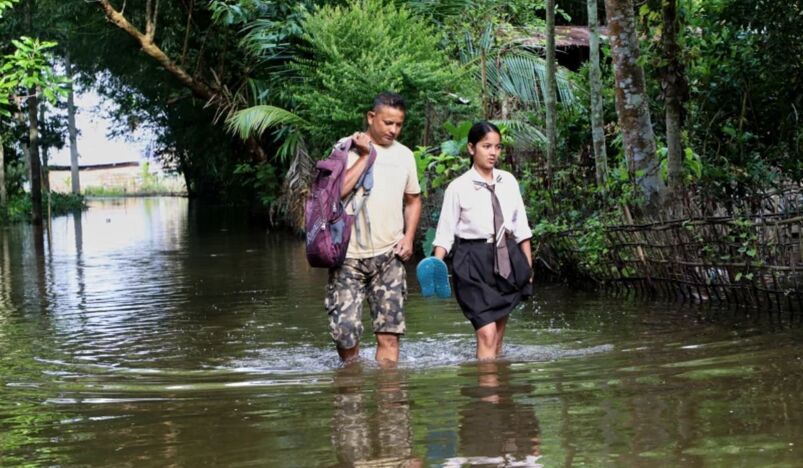
Human decisions and long-standing structural weaknesses appear to have played a greater role than climate change in turning seasonal monsoon rainfall into a deadly flood disaster in Assam, according to a rapid scientific analysis.
World Weather Attribution researchers examined repeated spells of heavy rain across Upper Assam and neighbouring hill catchments between late June and early August. They found that rainfall of the observed intensity is not unusual for the region and can be expected roughly every one to two years.
The analysis did not identify a clear influence from human-caused warming on either the short, intense rainfall bursts or the longer wet period that saturated the landscape. Researchers cautioned that rainfall records and climate models for the area contain substantial uncertainty, so the finding does not mean climate change has no wider impact on India or future flood risk.
Instead, the study highlighted high population exposure, poverty, dependence on agriculture and the geography of the low-lying Brahmaputra Valley, which receives rapid runoff from surrounding hills. Unplanned urban growth, deforestation, degraded wetlands, poor drainage, weak embankments and limited flood-management infrastructure further increased the damage.
The floods and associated landslides have killed more than 100 people in Assam, displaced over 700,000 and submerged large areas of farmland. Tens of thousands of livestock and pets were also lost, deepening the impact on households that rely on animals and agriculture for income.
Floodwaters cut off roads and healthcare facilities, interrupted access to medicines and increased the risk of disease in crowded relief centres. Researchers said these effects show how a weather event becomes a humanitarian disaster when warnings, infrastructure and public services are unable to protect exposed communities.
The findings point to practical priorities beyond emissions reduction: restoring forests and wetlands, improving drainage and embankment maintenance, protecting natural floodplains, strengthening early-warning systems and ensuring alerts reach vulnerable residents in time.
Scientists stressed that climate change is worsening many hazards across South Asia, but attributing every disaster to global warming can obscure local failures that governments can address immediately. In Assam, reducing exposure and repairing environmental and infrastructure weaknesses may offer the fastest route to lowering future flood losses.

_20-32-2026_06-32.jpg)
_08-27-2026_04-27.jpg)

.png)

_20-08-2026_05-08.jpg)
_27-51-2026_11-51.png)
_27-43-2026_12-43.png)



.jpg)
.jpg)




.jpg)


.jpg)
.png)
.jpg)












Leave a comment