


 By neha - June 08, 2026
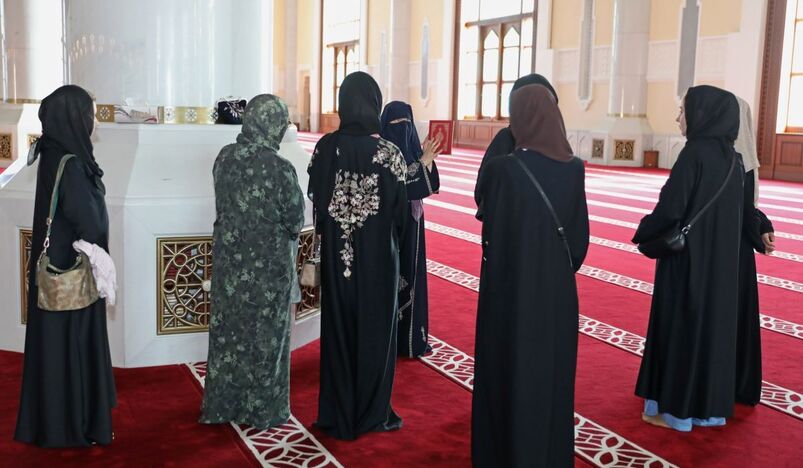
The Sheikh Abdullah bin Zaid Al Mahmoud Islamic Cultural Centre opens Qatar's mosques to English, Russian, and Spanish-speaking communities through guided architectural and cultural tours.
Nearly 80 people walked through the doors of some of Doha's most significant mosques last month. They came from different countries, spoke different languages, and arrived with different levels of familiarity with Islamic culture. They left with something in common.
The Mosque Visit Programme, organised by the Sheikh Abdullah bin Zaid Al Mahmoud Islamic Cultural Centre, ran throughout the month of May. Its goal was direct — introduce English, Russian, and Spanish-speaking communities to Islamic culture through the architecture, design, and spiritual character of Qatar's mosques.
- Three Mosques. Three Architectural Stories: The centre was deliberate in its selection. Each mosque on the programme represents a distinct architectural tradition within Islamic design — giving participants a layered understanding of how Islamic culture expresses itself through built space.
- The Imam Muhammad ibn Abd al-Wahhab Mosque anchors the programme in traditional Qatari identity. Its white colour scheme, floral and geometric ornamentation, and wooden doors reinforced with traditional copper studs reflect the local architectural heritage of the region. The mosque features an open courtyard and carefully designed windows that draw natural light into the prayer hall in a carefully balanced way. Locally inspired minarets and domes complete a structure that is unmistakably rooted in Qatari tradition.
- The Education City Mosque tells a different story. It represents contemporary trends in Islamic architecture and design. Its two minarets are designed to symbolise pens — a fitting tribute to its academic surroundings. The overall form of the mosque resembles an inkwell. Calligraphic decorations and flowing architectural patterns maximise the use of space throughout the interior. The mosque's calm colour palette creates an atmosphere of tranquility and serenity that visitors noted immediately.
- The Sheikh Hamad bin Jassim bin Jaber Al Thani Mosque brings Ottoman architectural influences into the conversation. Its minaret layers, domed forms, and intricate geometric and floral motifs draw on one of Islamic architecture's richest traditions. Stained glass adds a distinctive aesthetic touch to the interior, while Arabic calligraphy runs through the mosque as a continuous decorative and artistic element.
Why Architecture Is the Entry Point
The centre's choice to centre the programme on architectural diversity is not accidental.
Mosques are among the most accessible expressions of Islamic culture for non-Muslim visitors. They communicate history, spirituality, artistic tradition, and community values simultaneously — without requiring any prior religious knowledge from the visitor.
By selecting three mosques that each represent a different architectural era and influence — local Qatari, contemporary Islamic, and Ottoman — the programme gives participants a genuinely comprehensive introduction to how Islamic culture has evolved and expressed itself across centuries and geographies.
A Programme Built for Inclusion
The Mosque Visit Programme serves three distinct linguistic communities — English, Russian, and Spanish-speaking residents and visitors in Qatar. Each community receives dedicated tours tailored to their language and cultural context.
The nearly 80 participants who joined in May reflect the diversity of Qatar's expatriate population and the growing appetite within that population for meaningful cultural engagement.
The Sheikh Abdullah bin Zaid Al Mahmoud Islamic Cultural Centre continues to position the programme as a bridge — between communities, between cultures, and between architectural traditions that span more than a thousand years of Islamic history.

_20-08-2026_05-08.jpg)
_27-51-2026_11-51.png)
_27-43-2026_12-43.png)



.jpg)
.jpg)




.jpg)


.jpg)
.png)
.jpg)












Leave a comment